

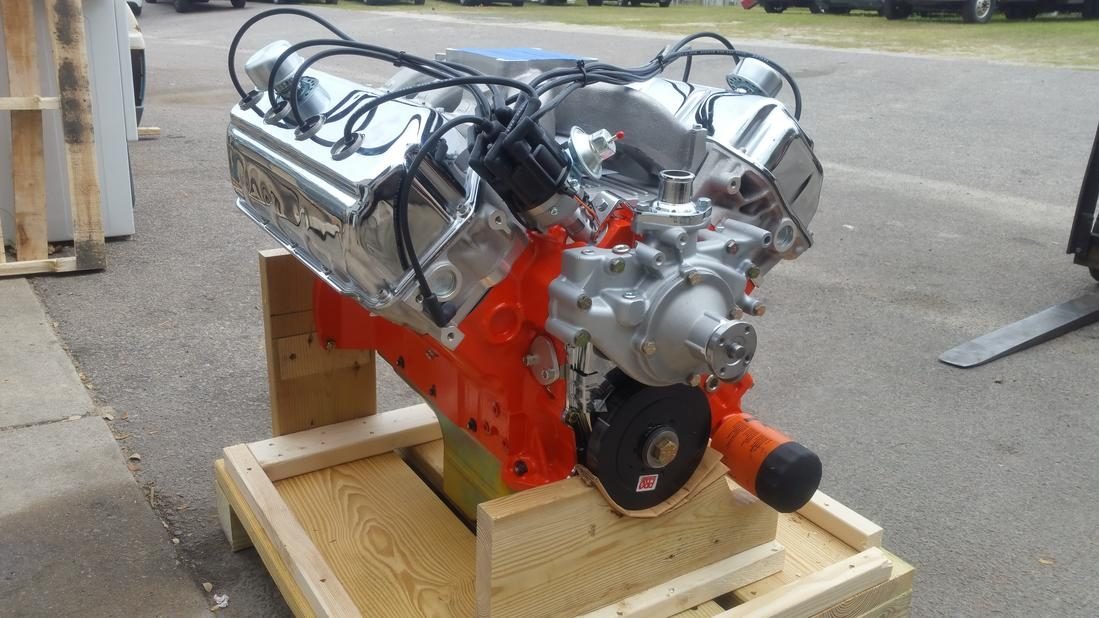
If your engine is tired, you have two real options: buy a crate engine or have your engine rebuilt. A crate engine is a brand-new, factory-assembled engine shipped ready to install. A rebuilt engine is your existing engine (or a donor core) torn down, machined, and reassembled with new wear parts. Neither choice is wrong — but the right one depends on your budget, your timeline, and what your car actually needs. This crate engine vs rebuilt engine guide compares cost, warranty, fitment, and downtime so you can decide with confidence.
Table of Contents
- What Is a Crate Engine?
- What Is a Rebuilt Engine?
- Crate Engine vs Rebuilt Engine: Key Differences
- How Much Does Each Cost?
- Warranty and Reliability
- Fitment: Will It Bolt Into Your Car?
- Which Is Right for Your Build?
- Frequently Asked Questions
What Is a Crate Engine?
A crate engine is a brand-new engine assembled by the manufacturer or an authorized builder and shipped in a crate, ready to drop in. It arrives complete or nearly complete — block, heads, rotating assembly, and often intake, accessories, and electronics — and it has never been run in another car.
- What you get: a new engine with new parts throughout, built to factory specs and tested before it ships.
- Best for: engine swaps, restomods, and builds where you want known horsepower and a warranty on day one.
- Example: the MOPAR 392 crate engine makes 485 horsepower and 475 lb-ft of torque, and it carries a transferable 3-year / 100,000-mile Mopar powertrain warranty. The Hellcrate Redeye crate engine goes further — 800+ horsepower with the supercharger, ECU, and harness included, ready to swap.
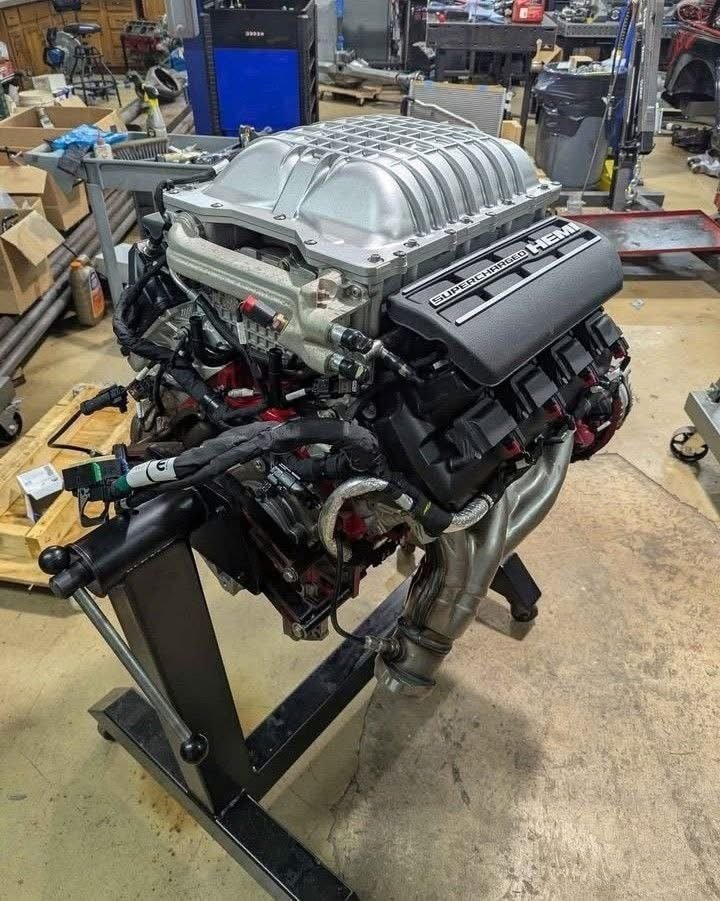
In this crate engine vs rebuilt engine comparison, crate engines shine when you want a documented power number and a short install. The tradeoff is price: you are paying for all-new parts, factory assembly, and testing.
What Is a Rebuilt Engine?
A rebuilt engine starts with an existing engine — usually the one already in your car — that is disassembled, cleaned, inspected, and machined back to spec. Worn parts (bearings, rings, gaskets, timing components, and often pistons and valves) are replaced, and the engine is reassembled and tested.
- What you get: your engine, restored to healthy spec — often with performance upgrades added during the rebuild.
- Best for: keeping a numbers-matching car original, restoring a classic, or building a high-spec motor around a block you already own.
- Example: the 1969 440 high-performance rebuild is a MoparShop rebuild of a 1969 440 block with forged pistons, a forged crankshaft, and a Comp Cams hydraulic camshaft — a period-correct engine built to high-performance specs.
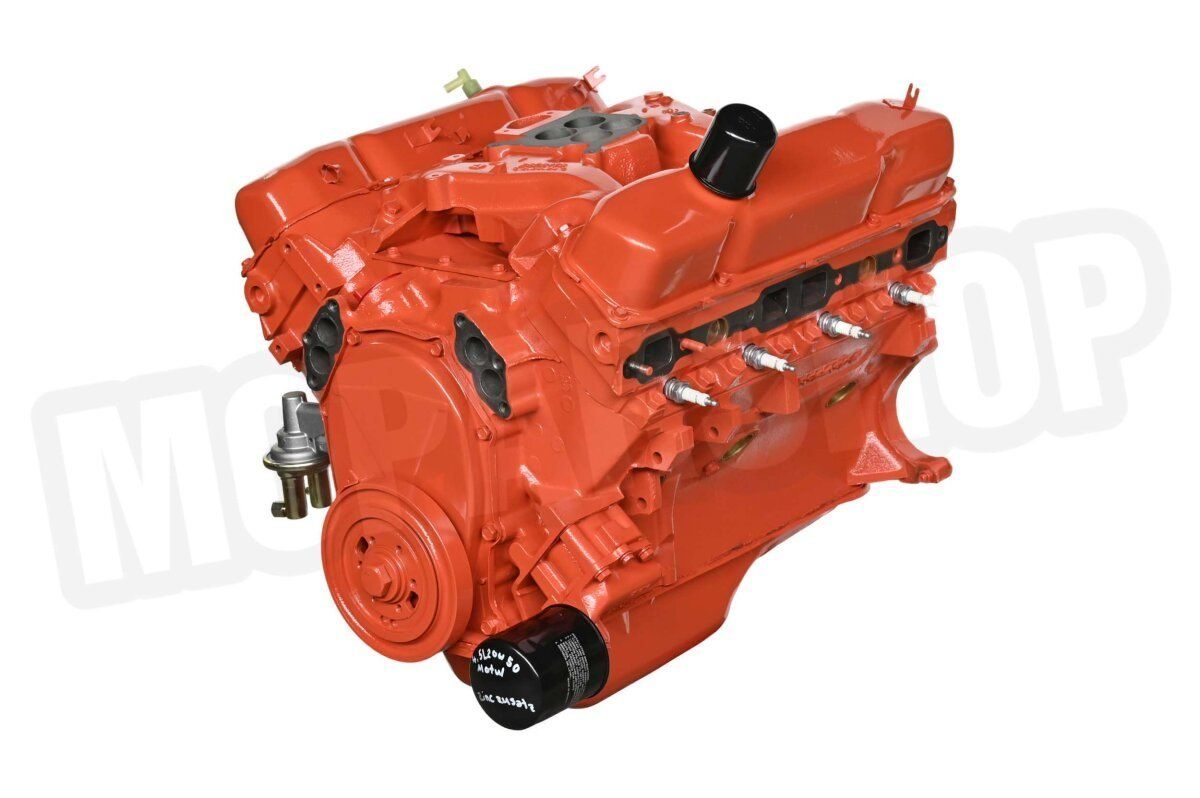
A rebuild keeps your original block and casting numbers, which matters for collector cars. The tradeoff is time: machine-shop work, parts sourcing, and assembly take weeks, and the final cost depends on what the teardown finds.
Crate Engine vs Rebuilt Engine: Key Differences
| Factor | Crate Engine | Rebuilt Engine |
|---|---|---|
| Parts | 100% new | Mix of machined original + new wear parts |
| Power output | Factory-rated, documented | Depends on the build spec |
| Warranty | Factory warranty (e.g. 3-yr / 100k mi on Mopar) | Builder warranty, varies by shop |
| Timeline | Ships ready to install | Weeks of machine-shop time |
| Originality | New block, new numbers | Keeps your original block and casting numbers |
| Fitment | Built for a known application | Built around your car |
| Best for | Swaps, restomods, quick turnaround | Numbers-matching cars, custom builds |
The short version of this crate engine vs rebuilt engine comparison: a crate engine buys certainty and speed. A rebuilt engine buys originality and customization.
How Much Does Each Cost?
Rebuilt is not always cheaper — it depends on the spec. Here is what real engines cost in the ProHorsePower catalog right now:
- 345 Crate HEMI long block: $4,495. A solid starting point if you are building around a Gen III HEMI.
- MOPAR 392 crate engine (6.4L, 485 hp): $7,899.95, with the 3-year / 100,000-mile warranty.
- Hellcrate Redeye crate engine (800+ hp): $10,000, supercharger and standalone ECU included.
- 426 HEMI crate engine (505 hp, dyno tested): $21,950.
- 1969 440 high-performance rebuild: $27,002.07 — a full MoparShop rebuild with forged internals.
A basic rebuild of a common small-block can cost less than a crate engine. But a high-spec rebuild with forged pistons, a forged crank, and performance heads can cost more than a crate motor — so compare the full build sheet, not just the headline price. And remember the hidden costs: a crate engine may still need an install kit, wiring, or a controller, while a rebuild may need machine-shop work your quote did not include.
Warranty and Reliability
Warranty is where crate engines usually win. A factory crate engine like the MOPAR 392 crate engine comes with a transferable nationwide warranty honored by dealers. If something fails, the coverage is written down and the parts are new.
A rebuilt engine’s warranty comes from the builder. A reputable shop stands behind its work, but the terms vary — length, what is covered, and whether labor is included. Before you commit to a rebuild, ask for the warranty in writing: how long, what it covers, and who pays if it has to come back out.
Reliability follows the same split. A crate engine is assembled in a controlled environment and tested before shipping. A rebuild is only as good as the machine shop and the parts that went into it — which is why the builder’s reputation matters more than the price.
Fitment: Will It Bolt Into Your Car?
In a crate engine vs rebuilt engine purchase, neither option helps if it does not fit. Before you buy, confirm:
- Engine mounts and bellhousing: does the block match your car’s mounts and your transmission?
- Electronics: does a modern crate engine need a standalone ECU, harness, or controller kit? Mopar crate engines often require a specific wiring kit, sold separately.
- Cooling and exhaust: will your radiator, headers, and oil pan clear the new engine?
- Emissions: crate engines are generally for pre-1976 vehicles or competition use — check your local rules before ordering.
If you are unsure, call the fitment experts at ProHorsePower on (512) 588-2391 before you order. A five-minute call beats a five-week return.
Which Is Right for Your Build?
- Choose a crate engine if: you want a known horsepower number, a factory warranty, and the shortest path to driving. Swaps and restomods are the classic case — a Hellcrate Redeye crate engine or a 426 HEMI crate engine turns a project car into a finished car fast.
- Choose a rebuilt engine if: your car needs to keep its original block, you want a custom spec the factory never offered, or you already own a good core. Numbers-matching Mopars and period-correct restorations are the classic case.
- Choose based on timeline if: you need the car running this season, a crate engine ships ready. If the car is a long-term restoration, a rebuild’s wait is less of a problem.
Still torn? Start from the car, not the engine. A numbers-matching classic points to a rebuild. A restomod or swap points to a crate. And if the budget is the deciding factor, price the full job — engine, install kit, electronics, and labor — for both options before you decide.
Frequently Asked Questions
Is a crate engine better than a rebuilt engine?
In a crate engine vs rebuilt engine comparison, a crate engine is better when you want new parts, a factory warranty, and a documented horsepower figure with minimal downtime. A rebuilt engine is better when originality or a custom spec matters more than speed.
How long does a rebuilt engine last?
A properly rebuilt engine with new bearings, rings, and gaskets — assembled by a reputable shop — can last as long as a new engine. Longevity depends on the machine work, parts quality, and break-in, not on whether the block is new.
Can I put a crate engine in a classic Mopar?
Yes — crate engines are a popular choice for classic Mopar restomods, including HEMI swaps. Confirm mounts, transmission fitment, electronics, and your local emissions rules first, and call (512) 588-2391 if you need fitment help.
Does a crate engine come with a warranty?
Most factory crate engines do. For example, the MOPAR 392 crate engine carries a 3-year / 100,000-mile Mopar powertrain warranty. Always confirm the exact warranty terms for the specific engine before you buy.
Shop the Build
Ready to pick your engine? Browse crate engines and rebuilds at ProHorsePower — from the 345 Crate HEMI long block to the Hellcrate Redeye crate engine — or call (512) 588-2391 and talk through fitment with an expert before you order. Tell us the car, the goal, and the budget, and we will help you choose the engine that actually fits your build in this crate engine vs rebuilt engine decision.
For more industry context, see SEMA and Engine Builder Magazine.